Would You Remember Everything?
Megan Choi
December 2025 — Psychology
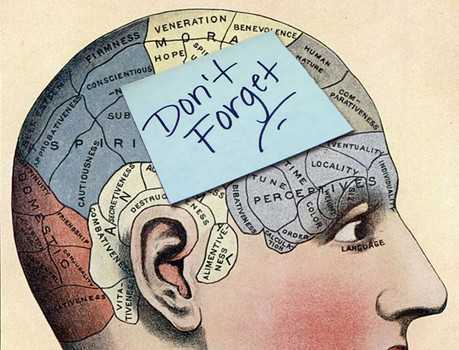 Dear reader, close your eyes and try to remember your first birthday. Can you picture where you were, what the cake looked like, or who was holding you? Most likely, you can not remember anything. In fact, almost no one can recall events from their first few years of life. This strange gap in our memory is called childhood amnesia, and it happens to nearly everyone. Although babies are constantly learning, exploring, and reacting to the world, their brains and cognitive abilities aren’t sufficiently developed to store lasting memories. By understanding how memory develops in early childhood, we can begin to understand why our earliest experiences fade away.
One reason we can’t remember our earliest years is that the brain simply wasn’t developed enough to store lasting memories. The hippocampus, which is the part of the brain responsible for forming long-term memories, is still immature in infants. It is growing and learning how to process information, but it isn’t stable enough to hold experiences we can recall afterwards. Babies also have an enormous number of neural connections, and many aren’t organized or needed. As children grow, the brain undergoes a process called synaptic pruning, where unused connections are removed to make the brain more efficient. While this process is essential, it can also erase early memories. The prefrontal cortex, another important area involved in storing and retrieving personal memories, is also underdeveloped in young children. Because so much of the brain is still growing, the memories we form during these early years are either stored incorrectly or lost entirely.
Another important factor in childhood amnesia is language. Memories aren’t just stored as images or feelings; they often need words to organize and label them. However, when infants and young children experience events, they usually don’t have the language skills to describe what is happening. Without words, it is harder for the brain to convert those experiences into memories that can be recalled. For example, a two-year-old child might feel excited at a birthday party, but because they cannot say or think about “birthday” or “cake” in a structured way, the memory fades. As children develop language, they begin to store memories in a more organized form, which is why our earliest retrievable memories usually appear around the ages of three or four, when language skills are more advanced.
A child’s sense of self also plays a key role in early memory. Autobiographical memories, which are personal memories about our own lives, require an understanding that “I” am a separate person with experiences that belong to me. Babies and very young toddlers haven’t yet fully developed this awareness. They react to the world and form experiences, but they don’t have the concept of themselves as individuals who can remember and reflect on their past. Around age two or three, children start to recognize themselves as separate individuals, which is seen when they recognize themselves in a mirror or refer to themselves by name. As this sense of self develops, the brain becomes prepared to store personal memories in a way that can be recalled.
Even when early experiences are encoded in the brain, retrieving them later can be difficult. Memories are organized and connected through the brain’s networks, which change as we grow. Pixar’s movie “Inside Out" illustrates this idea well. In the film, Riley’s childhood memories are stored as glowing orbs in her “memory bank.” Some orbs fade or are eliminated when the brain decides they are no longer important, showing how early experiences can disappear even if they had a significant impact on shaping her. Over time, as the brain reorganizes and strengthens newer connections, many early memories become inaccessible. In other words, our earliest experiences may not vanish completely; they are just stored in ways that make them difficult for us to retrieve.
Now, after all this information, people might wonder, does everybody fail to remember their childhood? The answer is no. Some rare individuals, like the actress Marilu Henner, have hyperthymesia and can recall nearly every day of their lives, even from very early childhood. Henner has described remembering what she wore, what she ate, and even the weather on specific dates decades ago. While this might sound amazing, it also comes with challenges, as remembering both positive and negative experiences so vividly can be overwhelming. For most of us, childhood amnesia actually protects us, allowing our brains to grow, reorganize, and focus on memories that matter most. Forgetting is a necessary part of development, enabling us to manage experiences and move forward in life. So, as you think about your own earliest memories, ask yourself. Would you rather remember every single moment of your life like Marilu Henner, or live naturally as we do, letting some memories fade as you grow?