Migration’s Effects on Host and Home Countries
Macy Kim
May 2025 — International Politics
What Is Migration?
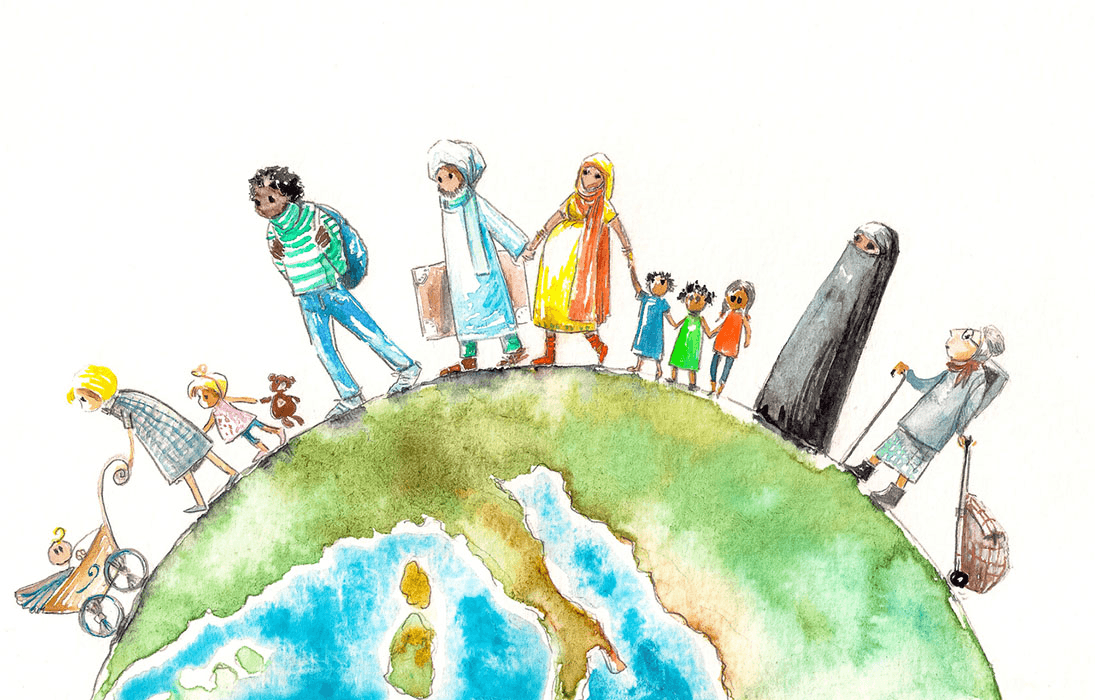
Migration refers to the movement of people across borders, between countries. The migrant moves from the home country to the host country. Migration is not just a simple social or economic issue, but it is also a political issue that deeply connects two or more countries—or, at times, separates them. A fair and humane system of migration is made possible through the help of international organizations, specifically the United Nations High Commissioner for Refugees (UNHCR) and the International Organization for Migration (IOM). It is important to understand migration’s influence on both host and home countries for global cooperation.
Effects on Host Countries
There are both positive and negative impacts that host countries experience from incoming migrants. One positive effect of migrants on host countries is strong economic growth. Most often, when workers come from abroad, they tend to work in sectors where there is a shortage of local labor. These industries typically involve agriculture, construction, and elder care. For instance, in California and Florida, many migrant workers from Central America and Mexico work on farms and harvest crops. Without these workers, the farms would not be able to meet the demand for crops, making the whole economy struggle. In addition, in Germany, workers from Turkey and Syria help address labor shortages in manufacturing and elder care. Like these examples, in modern societies, migrants serve as a significant labor force to keep the economy growing and developing. In addition to addressing labor shortages, migration also brings in cultural diversity. Cities such as Toronto and New York are famous for having diverse populations from various cultural backgrounds.
Despite the economic boost and cultural enrichment that migrants bring to the local economy, undeniably, there are challenges. One of the biggest challenges is the social tension that arises between local residents and migrants. This most likely occurs when host communities are not fully ready to accept a new population as part of their original community. In 2015, over one million refugees entered Europe, fleeing from war in Syria. While some countries like Germany accepted these refugees, Poland and Hungary refused to do so. This further caused political tensions between countries and conflicts within the European Union.
Effects on Home Countries
Home countries also experience both positive and negative consequences from migration. The primary and most positive effect of migration is the inflow of remittances—money that migrants earn and send back to their families in home countries. This improves families’ living standards and supports them economically. Beyond this, remittances further contribute to the national economy. In certain countries like Nepal and the Philippines, the flow of remittances is very crucial. In Nepal, remittances make up more than twenty percent of GDP and are responsible for keeping the economy stable. In other words, one-fifth of the entire economy depends on money sent by workers abroad. This income also helps the government fund social programs and reduce unemployment pressures within the local economy.
However, one negative impact is brain drain. Brain drain is a phenomenon where a large number of professionals or highly educated workers from diverse sectors move to other countries seeking better job opportunities. Most commonly, doctors, engineers, and IT workers migrate to countries that can pay higher salaries and offer better working conditions. This is problematic since the home countries can’t provide their citizens with basic infrastructure (such as healthcare services) that they need. In Sub-Saharan Africa, many doctors migrate to the UK and Canada, while in India, many IT professionals move to the United States or Europe. Brain drain is particularly damaging when governments have invested heavily in education and training, only to lose their skilled workers to other nations.
Conclusion
Although migration may seem like a small local issue, its effects are much greater than most people believe. It involves actions by major global organizations and partnerships between countries. Migration brings both opportunities and challenges to nations. However, the truth is that fair and well-managed migration policies lead to greater cooperation among diverse nations and further enrich cultures. The future of the global economy will greatly depend on how countries worldwide manage migration issues. If handled properly, migration can be a positive force that connects people from different cultural backgrounds and boosts the global economy.