Intelligence
Alvin Park
March 2025 — Psychology

In our society, people think that more intelligence makes people have better lives. In fact, intelligence is one of the factors that influences our lives. Intelligence in psychology is the ability to learn from experience, solving problems, and use knowledge to adapt to new situations. There are many different theories about intelligence, and still much research is being done on the psychology of intelligence.
In 1904, general intelligence was first introduced by Charles Spearman. He proposed that people often have special abilities that stand out. He developed factor analysis, a statistical procedure that identifies clusters of related items. Since the mid-1980s, some psychologists have tried to expand the definition of intelligence beyond Spearman. And in 2002, Gardner’s eight intelligence was introduced. He viewed intelligence as multiple abilities that come in packages. To prove it, Gardner talked about brain damage, for example, destroying one ability but leaving the other intact. He considered this as savant syndrome, a condition in which a person otherwise limited in mental ability has a specific exceptional skill. So, if there is damage in the brain that someone’s language ability doesn’t work effectively as before, that person might suddenly be exceptionally good at calculating.
After the brilliant English poet Lord Byron died in 1824, doctors discovered that his brain was a massive 5 pounds. It was incredible, because normally humans’ brain weight was 3 pounds. There was also research that some dim-witted criminals had brains like Bryon’s. More recent studies showed the correlations of +0.33 between brain size and intelligence score by MRI scan, which is not a strong correlation.
The modern intelligence testing movement began at the turn of the twentieth century, when France passed a law requiring that all children attend school. The French government hesitated to trust teachers’ subjective judgements of children’s learning potential. Low academic achievement may simply be due to a lack of prior education. Also, teachers might prejudice children based on their social backgrounds. To minimize bias, Alfred Binet and others studied the problems. Binet and his collaborator, Theodore Simon, started to study children's mental age. After Binet's death in 1911, Stanford University professor Lewis Terman found Binet's test for use as a numerical measure of inherited intelligence. Adapting some of Binet’s original items, adding others, and establishing new age norms, Terman extended the upper end of the test range of teenagers to “superior adults.” He also gave his revision named Stanford-Binet. From such a test, German psychologist William Stern derived the famous intelligence quotient, or IQ. The IQ is simply a person’s mental age divided by their chronological age, multiplied by a hundred. So, an average child, who has the same mental and chronological ages, has an IQ of 100.
However, these days schools require basic reading and math skills, course exams, intelligence tests, etc. Psychologists classify such tests as either an achievement test—intended to reflect what you have learned—or an aptitude test—intended to predict your ability to learn a new skill. The college entrance test can be a type of aptitude test, and the case of midterm and final tests in the school can be a type of achievement test. However, the differences between achievement and aptitude tests are not exactly clear, because your achieved vocabulary influences your score on most aptitude tests. Also, your aptitudes for learning and test talking influence your grades in the achievement test. Psychologist David Weschsler created what is now the most widely used intelligence test, the Wechsler Adult Intelligence Scale (WAIS). The WAIS consists of 11 subtests broken into verbal and performance areas. It provides us with a general intelligence score, similar to the Stanford-Binet, while separating scores for verbal comprehension, perceptual organization, working memory, and processing speed.
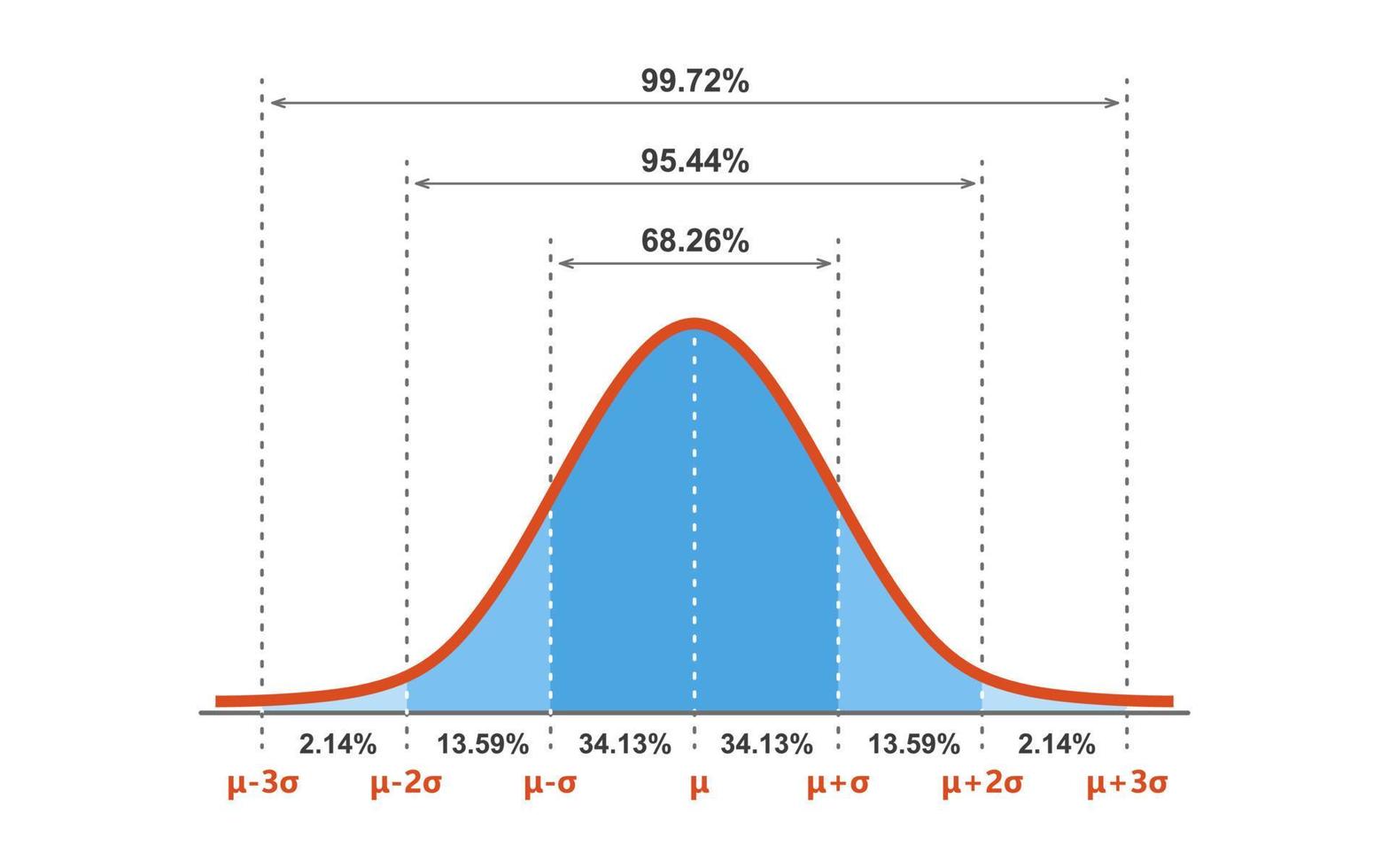
To be widely accepted by people, psychological tests must satisfy at least 3 criteria: standardization, reliability, and validity. Standardization defines scores by comparing with the performance of a pretested group. Group members’ scores typically are distributed in a bell-shaped pattern that forms a normal curve. Reliability should make people get similar scores, even though they take a retest. So, its predictions must be similar to the same person. The validity assumes that the test in question measures precisely what it aims to measure, meaning data collected is accurate and represents some truth.
Intelligence is an important factor in our lives, especially. As schools and colleges require higher levels of study, our intelligence should back it up. It can be defined in various ways such as IQ tests, WAIS, etc. All of the psychological tests have 3 criteria, which are standardization, reliability, and validity.